

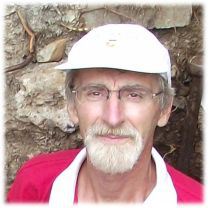
I'm Peter Gargano and I live in Coffs Harbour, NSW, Australia. I work there occasionally and also in Canberra where my business is currently based. In September 2013 I travelled the Canning Stock Route (CSR) with my wife in a Suzuki Vitara (2002 model, 4-door). I took a conventional MTB bicycle on the roof-rack, and cycled about 30km of the complete CSR's approx. 1,700km. Despite finding it almost impossible to cycle such sandy terrain on that bike, I was hooked! So I gave myself a Surly Moonlander for Christmas in 2013 and planned to come back in June 2014 (more info about my 2014 trip here [coming soon]).
This website documents my preparations for a CSR cycling adventure I'm organising for late May (to get there) for an early June 2015 start. When I've (hopefully) completed the trip I'll update the site with more info. Send me an email bike.csr.2015@gmail.com of support or criticism. Here's my facebook page if you prefer to contact me that way. As I write this I don't have a full support crew, although a lot of people have expressed interest in this adventure. If you're interested then factor in an up to 8 week time-frame to get there, prepare, actually do it, and come back. I'm taking a Suzuki Vitara XL-7 petrol powered 4x4, possibly with a trailer. Realistically I can take two additional people apart from myself. I'm happy for one of those people to be a cyclist with a desire to cycle the CSR too - but be warned I'm attempting to cycle the CSR solo and unassisted, and on the CSR the Vitara is a basically a safety vehicle, not an actual support vehicle (ie. it's used to get to the CSR, and to come home again as well as minimising risks). So one of those passengers is expected to be able to capably drive a 4x4 over 700 sand ridges, 1,700km of stony/sandy desert, and over 3-4 weeks, without support from me!
I had a trailer, based on the BOB design, built for me by Luke Laffan (Fikas Bikes, Queanbeyan), in a 2014 attempt (I flew to Perth, and flew back). But because of a prior wrist injury that became a problem just 160km out of Perth, I didn't make it to actual the CSR. However Alan Melville did get to the CSR with my trailer in 2014, and he found it was unstable and hard to handle, and probably contributed to him pulling out after a couple of days of what he considered intolerable corrugations. This experience demonstrated to me that a new trailer design was required to successfully negotiate the CSR by bicycle.
My old 2014 trailer can be seen here [coming soon], but shown here is my new 2015 design (concept iteration #2) - longer, more rigid structurally with quality roller-bearing vertical and horizontal hinges, and a true quick release system (and here's previous concept #1). Its major design feature is, right behind the saddle, a "co-planar hinge" for the integrated horizontal and vertical hinges necessary when a single wheel trailer is used (a self-supporting multi-wheel trailer can use a simple ball-joint coupling) - this is different to the BOB, and other designs, in that the vertical "hinge distance" is much longer, giving it inherent stability over shorter designs. A disadvantage of my system is it's potentially greater weight. Note that a multi-wheel trailer will not work on the CSR as, for much of its distance, the CSR is simply two U-shaped corrugations that all vehicles must use.

Very important is the connection point between trailer and bike - the classic BOB and ExtraWheel designs both connect to the rear axle. The major problems are:
By providing a purpose built connection point away from the bike's rear tyre we also easily realise a rigid hinge and a true quick release system with the bike's rear panniers staying with the trailer - and in seconds the bike transforms to almost it's factory-floor weight. By using the bike's seat-post and seat-stay (where most bikes will have nipples for bike-rack connections) the load is removed from the rear axles and transmitted to the rider's seat which should also have advantages in promoting stability through the inertia of the rider's weight.
The configuration shares the trailer's load with the bike's rear wheel, and, as the connection point is ahead of the rear axle, a very small part of the trailer load is taken by its front wheel too. The trailer is thus steered by the rider a little, rather than just being pulled and reacting to the rear wheel alone. Those big semi-trailers you've probably tried to avoid on the highway also work this way too.
One possible scenario is to use a solar panel on the trailer to charge a Lithium Ion battery that can be used to power a hub-motor. The motor and batteries would only be used, at high power level, for very short periods when climbing the 700-odd sand ridge (some are 15m higher than the surrounding plains) along the 1,700km of the CSR. At other times the motor could be switched off, or run at a low power level (say 50W) to counteract the additional weight of the panel, motor and battery (ie. nothing comes for free - if you want sand-ridge assistance then you have to lug around that baggage over the plains!).
Currently available 100W flexible solar panels are quite light (less than 3kg), relatively low cost (less than $300 trade price), and have efficiencies of around 20% (latest technology panels, although probably unobtainable commercially, are pushing 45% as I write this). The 100W panels, although nominally for 12 Volt applications, produce their peak power at 17-19 Volts, but highly efficient electronics are readily available that can convert the panel's optimal load-voltage to either a lower or higher voltage, to charge a battery, or for immediate use - although any real-world application would normally include some kind of short term-storage (battery, capacitor) for when the panel is in shadows, or to store power that will be used later at a much higher rate than the panel can produce. One such panel is 1260mm x 570mm and this is perfect for a bicycle trailer - any wider could become an issue on the CSR as there's lots of tough vegetation (grevillea, etc.) right beside the track that will grab at anything much wider than the rear-vision mirror of the last 4x4 vehicle that used the route.
Lithium Ion batteries, with very high energy densities (high power/weight ratios) have been available for several years now - many race-cars now use lithium batteries to keep their weight down, and people are starting to talk about electric motorbikes being race-competitive with conventional petroleum powered bikes. A 36 Volt Lithium Ion battery-pack is made up of individual cells with a nominal terminal-voltage of around 3.6 Volts so that a 36 Volt battery is made up of around 10 cells (your conventional 12 Volt lead-acid battery is made up of six 2 Volt cells). Special charging electronics are required to prevent over-charging and over-discharge. A 500 Watt power coming from a 36 Volt battery will require a 500/36 or about 14 Amps current. The cabling must be appropriate for this current as small wires will get hot and waste power - they will also weigh more than lower capacity cables!
Hub motors, specifically designed for bicycles, are available from China at low cost (around $250 which includes control electronics) and are available with powers starting at 250 Watts (and even 2000+ Watt motors are available) but I think something like a 500 Watt power is appropriate as a fit cyclist can produce up to 500W for short periods of time (elite sprinters can perhaps produce short burst of up to 3 or 4 times this!). At maybe 80% hub motor efficiency that's just over half a horsepower (500*0.8/745.7). Note that legislation limits bicycle power to 200W for speed limited e-Bikes.
What, you thought this was going to be easy reading? Well, it will be if you paid attention during science classes! And just in case you're wondering, I was a senior science teacher in a previous life (1976-1977) in the NSW education system.
Some basics: A rate is something per unit-time, measured in seconds (s) - so, for example, if you run at a fast rate then you cover a larger distance in a certain time. If you work at a fast rate then you'll be expending energy at a higher rate and the job will take less time (rate = something/time).
A second (s) is a unit of time in the SI system and we'll being using SI units in the following calculations. A second (1s) is pretty short so it's worth remembering that a minute is 60 seconds and an hour is 60 * 60 seconds (or 3,600 seconds). A cyclist is going pretty well if they can cycle a whole day. After taking out time for eating, etc., and for a short day length in June (where it's winter in Australia), then a 7 hour day's worth of cycling is good going (say from 8AM to noon and 12:30PM to 4:30PM, assuming an hours worth of non-cycling, non-break activity like repairing a flat tyre, etc.)
A Joule (J) is a measure of energy. This is a small measure, and we usually see a more common measure of kJ (thousands of Joules). Our food in Australia is required by law to show energy content - look at your peanut butter right now and you'll see it has an energy content of at least 2,500kJ/100g. Roughly speaking this means that if you eat two jars of peanut butter (2 * 500g) you'll have eaten has an energy content of 25,000kJ.
A Watt (W) is a measure of power, and is also a rate of doing work or of transforming energy. A Watt isn't a lot of power and often you'll see a kW (kilo-Watt) measure which is 1,000 Watts, or the power of ten 100W incandescent light bulbs or two hundred 5W LED downlights (those 200 LEDs will totally outshine those 10 incandescents, but that's another story - efficiency!) A Watt is defined as one Joule per second (or 1W = 1J/1s). If you use power at a certain rate, then to calculate your energy usage, you multiply the rate by time (energy (J) = power (W) * time (s)).
Back to the peanut butter (and efficiency). Two jars of peanut butter, 1kg, contain at least 25,000kJ (that's 25,000,000J) of energy. If our bodies are 100% efficient (and they're much less than 100%), and assuming we can produce power at a rate of 150W, then the 1kg of peanut butter can power us for 25,000,000/150 seconds = 166,667 secs, or about 46 hours at 100% efficiency. perhaps that's as low as 14 hours at about 30% efficiency - so let's guess that the equivalent of a jar (0.5kg) of peanut butter (500g) can power us for 7 hours of cycling (ie. one days' hard cycling). If you don't like peanut butter then (nut based) bars are available with up to 3,000kJ/100g - and these are much more satisfying than sugar and starch based bars (ie. glucose and oat, or muesli bars) and you'll need about 6-8 100-125g bars per day.
I estimate (ie. guess!) that a CSR cyclist would need around 150W of continual power to maintain 8 to 10km/hour average over the CSR. That will take you between 56 and 70 km that day and will cost you the equivalent of a jar of peanut butter (no, I'm not assuming I just take peanut butter to eat!). Also, at this average speed it'll take a minimum of 1700/70 = 24 days or up to about 30 days to cross the CSR. The fastest crossing to date on a bicycle was 23 days (Halls Creek 15 May, to Wiluna 06 June) in 2009 by Australian cyclist Russell Worthington (ABC reference) although other cyclists have taken up to 45 days to do the same distance (the problem is one of taking enough food with you for the speed you travel (most cyclists report significant weight loss over the CSR!) So, a continual additional power input from a solar panel could allow a rider an additional 50W continually, and is perhaps 1/3 of cycling energy expenditure.
Batteries are heavy (but new Lithium batteries are relatively light compared to your car's battery) so you want the smallest that will do what you want and then add a margin for ageing and difficult terrain. Lets assume we're going to climb over a 15m sand ridge - the height isn't so much the problem, but the sand that moves and sucks your power (think of how much more difficult it is to walk on loose sand compared to compacted sand at the beach - it's the same in the desert and those sand ridges are easier to negotiate in the mornings before the sun dries overnight condensation (ref: Tom Walwyn). But lets work out how much energy we need to get over a 15m hill (d=15m) on a good road - Lets assume our trailer weighs 25kg with battery, motor and panel, the cyclist is 70kg, and the trailer is carrying another 50kg of food, water, and camping gear. That's 145kg all up (m=145kg). Physics tells us the work is m*g*d where g is the gravitational force (9.8) - so the work is 145*9.8*15 = 21,315 Joules. ...
See Energy and Power calcs.updated 16:50 13 December 2014
