

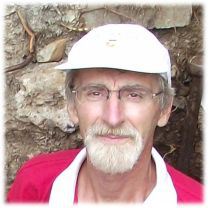
I'm Peter Gargano and I live in Coffs Harbour, NSW, Australia. I work there occasionally and also in Canberra where my business is currently based. In September 2013 I travelled the Canning Stock Route (CSR) with my wife in a Suzuki Vitara (2002 model, 4-door). I took a conventional MTB bicycle on the roof-rack, and cycled about 30km of the complete CSR's approx. 1,700km. Despite finding it almost impossible to cycle such sandy terrain on that bike, I was hooked! So I gave myself a Surly Moonlander for Christmas in 2013 and planned to come back in June 2014 (more info about my 2014 trip here [coming soon]).
This website documents my preparations for a CSR cycling adventure I'm organising for late May (to get there) for an early June 2015 start. When I've (hopefully) completed the trip I'll update the site with more info. Send me an email bike.csr.2015@gmail.com of support or criticism. Here's my facebook page if you prefer to contact me that way.
As I write this I don't have a full support crew, although a lot of people have expressed interest in this adventure. If you're interested then factor in an up to 8 week time-frame which will include travel to Wiluna (the start point, probably via Kalgoorlie), preparation, actually cycle/4x4 the route itself, then maybe do some Kimberly sightseeing, and then come back, probably via the Tanami Road. I'm taking a 2002 model Suzuki Vitara XL-7 petrol powered 4x4, possibly with a trailer. The XL-7 is a stretched version of the Grand Vitara (GV) and has three rows of seats rather than two in the basic GV.
Realistically I can take two additional people apart from myself. Travel there and back, in the XL-7, for the third person may be a little crowded unless we have a trailer, but a vehicle trailer on the CSR is problematic, and is advised against (although a powered trailer would make a pretty interesting 6x6 vehicle!). I'm happy for one of those people to be a cyclist with a desire to cycle the CSR too. But be warned I'm attempting to cycle the CSR solo and unassisted, and on the CSR, the XL-7 is basically a safety vehicle, not an actual support vehicle It's used to get to the CSR, and to come home again as well as to minimising risks to our adventure - the intention is that the XL-7 doesn't become the expedition's biggest risk! So, a mandatory requirement is that both passengers are expected to be able to capably drive a manual 4x4 over 700 sand ridges, 1,700+km of stony/sandy desert, and over 3-4 weeks, hopefully without support from me because I'll be on-my-bike!

In April/May 2014 I had a trailer, based on the BOB & extraWheel design, very professionally built for me by Luke Laffan of (Fikas Bikes, Queanbeyan).
In June I flew to Perth with the intention of cycling the 4,000km from there to Darwin via the CSR - the trailer and bike went by road freight to Fremantle and were waiting for me when I arrived.
Earlier in April I'd twisted and sprained my wrist when I tripped in a dark carpark running to catch a delivery van.
The wrist seemed to be healing, and after putting the trip off twice while preparing and waiting for the wrist to improve, in early June I figured I'd make the flight to Perth and see how it went.

After visiting Tom Walwyn, a Fremantle local who successful bicycled the CSR in 2013 with Scott Felter from Canada, I left from the beach at Fremantle early on Thursday 12 June. But it became apparent, just 160km out of Perth on the following Monday, that my wrist wouldn't be healed by the time I got to Wiluna, still 800+km away. And that meant I wouldn't be cycling the CSR in 2014. However Alan Melville, cycling from Mukinbudin (WA) did get to the CSR with my trailer in July 2014. Alan found the trailer was unstable and hard to handle in the sand, and this probably contributed to him pulling out after a couple of days of what he considered intolerable corrugations.
This experience demonstrated to me that a new trailer design was required to successfully negotiate the CSR by bicycle the way I wanted to do it. Sure, others have used simple trailers like Tom in 2013 (photo © Gaynor Schoeman) (Tom tells me this is a prototype ExtraWheel design, but I never saw it in the flesh, and Tom was reluctant to discuss it with me - yes, a mystery here I'm yet to solve!). But none of these people seemed to be very happy with how their trailer actually worked in practise.
To follow my discussion of trailer designs (specifically for the CSR), go here.
One possible scenario is to use a solar panel on the trailer to charge a Lithium Ion battery that can be used to power a hub-motor. The motor and batteries would only be used, at high power level, for very short periods when climbing the 700-odd sand ridges (some are 15m higher than the surrounding plains) along the 1,700km of the CSR. At other times the motor could be switched off, or run at a low power level (say 50W) to counteract the additional weight of the panel, motor and battery (ie. nothing comes for free - if you want sand-ridge assistance then you have to lug around that baggage over the plains!).
Currently available 100W flexible solar panels are quite light (less than 3kg), relatively low cost (less than $300 trade price), and have efficiencies of around 20% (latest technology panels, although probably unobtainable commercially, are pushing 45% as I write this). The 100W panels, although nominally for 12 Volt applications, produce their peak power at 17-19 Volts, but highly efficient electronics are readily available that can convert the panel's optimal load-voltage to either a lower or higher voltage, to charge a battery, or for immediate use - although any real-world application would normally include some kind of short term-storage (battery, capacitor) for when the panel is in shadows, or to store power that will be used later at a much higher rate than the panel can produce. One such panel is 1260mm x 570mm and this is perfect for a bicycle trailer - any wider could become an issue on the CSR as there's lots of tough vegetation (grevillea, etc.) right beside the track that will grab at anything much wider than the rear-vision mirror of the last 4x4 vehicle that used the route.
Lithium Ion batteries, with very high energy densities (high power/weight ratios) have been available for several years now - many race-cars now use lithium batteries to keep their weight down, and people are starting to talk about electric motorbikes being race-competitive with conventional petroleum powered bikes. A 36 Volt Lithium Ion battery-pack is made up of individual cells with a nominal terminal-voltage of around 3.6 Volts so that a 36 Volt battery is made up of around 10 cells (your conventional 12 Volt lead-acid battery is made up of six 2 Volt cells). Special charging electronics are required to prevent over-charging and over-discharge. A 500 Watt power coming from a 36 Volt battery will require a 500/36 or about 14 Amps current. The cabling must be appropriate for this current as small wires will get hot and waste power - they will also weigh more than lower capacity cables!
Hub motors, specifically designed for bicycles, are available from China at low cost (around $250 which includes control electronics) and are available with powers starting at 250 Watts (and even 2000+ Watt motors are available) but I think something like a 500 Watt power is appropriate as a fit cyclist can produce up to 500W for short periods of time (elite sprinters can perhaps produce short burst of up to 3 or 4 times this!). At maybe 80% hub motor efficiency, that's just over half a horsepower (500*0.8/745.7). Note that legislation limits bicycle power in Australia to 200W for speed limited e-Bikes.
To continue reading this discussion, follow this link...
page last updated 10:30 Sunday 14 December 2014


